Start with the whole formula, not a single ingredient
A familiar ingredient can make a supplement feel easy to understand. You recognize magnesium, see turmeric on the list, and assume you already know what the bottle offers. That shortcut leaves out several details: the ingredient form, the amount per serving, the other ingredients, and the evidence for the specific product you are considering.
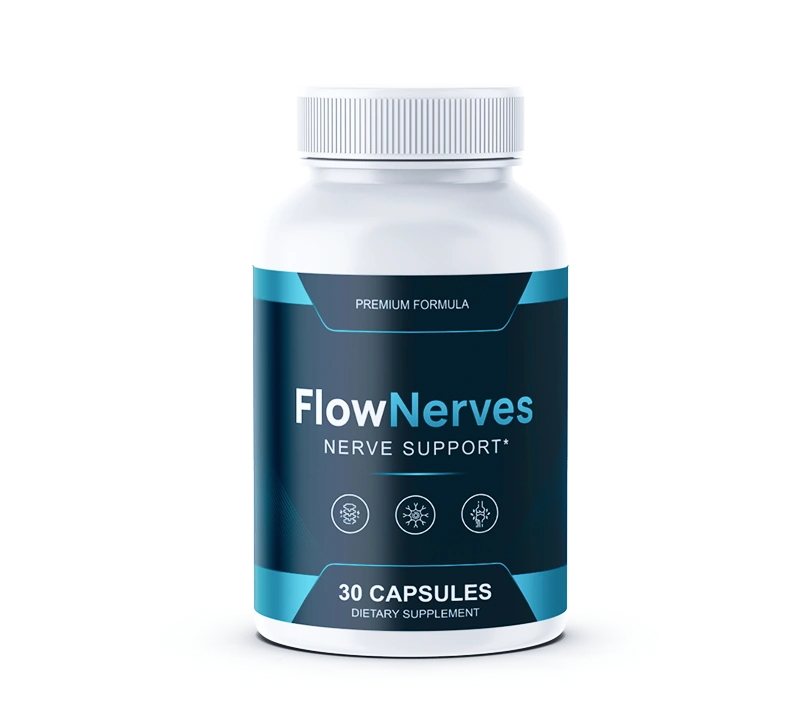
FlowNerves puts six named ingredients into a once-daily capsule. Each bottle contains 30 capsules, giving a 30-day supply at the suggested serving. The format is straightforward. The formula needs a closer look because the individual amounts within its proprietary blend are not clearly established by the product information available for this guide.
Treat the list as a starting point for comparison. It tells you what to ask about and which research to read. It does not show that every ingredient reaches a studied amount, that the combination is better than its parts, or that a buyer will experience a particular result. Those are separate questions that need separate evidence.
Magnesium glycinate: identify the mineral amount
Magnesium is a mineral involved in normal nerve and muscle function. The NIH magnesium fact sheet explains its nutritional roles. FlowNerves identifies magnesium glycinate as its magnesium form. The form name and the actual magnesium amount should both be checked on the Supplement Facts panel.
When you compare labels, look for the declared amount of magnesium rather than treating the weight of a magnesium compound as the same thing. A product can contain a mineral compound whose full weight is larger than the amount of the mineral it supplies. Clear label information makes that comparison possible; a large number on a promotional graphic does not.
Also consider what you already take. A multivitamin, a separate mineral capsule, and a nighttime supplement can all contribute magnesium. Write their amounts next to each other before adding another product. The goal is a complete picture of your routine, not the highest possible total. If you cannot find the amount in FlowNerves, request a readable label image before deciding.
Alpha-lipoic acid: match the question to the research
Alpha-lipoic acid is often shortened to ALA. It appears in many nerve-support supplements and has attracted research interest. Its presence on a bottle is still different from a clinical result for that bottle. A study of a specific ALA preparation cannot establish what an undisclosed amount in a mixed formula will do.
When reading an ALA study, check the participants, the product used, how it was taken, and the outcome measured. A trial in people with a diagnosed condition addresses a different question from whether a general supplement fits an adult wellness routine. A laboratory finding addresses a different question again. Keep those distinctions visible as you read.
For FlowNerves, the immediate buying question is the ALA amount per daily serving. Without that number, you cannot make a meaningful dose comparison. Do not fill the gap with an amount taken from another brand, a review video, or a study abstract. If the seller provides additional specifications, make sure they apply to the exact formula and bottle you plan to buy.
Butcher’s broom: read the botanical identity carefully
Butcher’s broom is a plant ingredient also known as Ruscus aculeatus. FlowNerves lists a root extract. With a botanical extract, details about the plant part, extract preparation, and any standardized constituents help describe what is actually in the capsule. The common plant name alone does not answer all of those questions.
A useful comparison therefore goes beyond asking whether two supplements both contain butcher’s broom. Check whether they identify the same plant part and whether the label gives an amount per serving. If one product lists an extract and another lists whole plant material, identical-looking numbers would not necessarily describe identical preparations.
This is also a good place to resist an easy assumption: traditional use does not establish a specific outcome from this combination. You do not need to dismiss a botanical to ask for better information about it. A reasonable buyer can want the extract details, a complete ingredient list, and a clear explanation of what evidence supports the finished product before spending money.
L-carnitine: the name of the form matters
Carnitine helps transport fatty acids into mitochondria for energy production. NIH explains that healthy adults generally produce enough themselves. Its carnitine fact sheet distinguishes L-carnitine from other forms, including acetyl-L-carnitine. FlowNerves lists L-carnitine, so research on a different form should not be relabeled as evidence for this ingredient.
You may encounter articles that shorten every form to “carnitine” and move between studies without explaining the difference. That can make a formula sound more thoroughly studied than it is. Read the actual intervention in a paper and compare it with the exact wording on the supplement label. Similar names are not enough.
For a practical label comparison, note the form in one column and the amount in another. If the form is clear but the individual amount is unavailable, mark the amount as unknown. That is a more honest and useful record than estimating it from where the ingredient appears in a blend list. You can then decide whether that level of disclosure is acceptable to you.
Turmeric extract: understand the 95% figure
FlowNerves lists turmeric extract standardized to 95% curcuminoids. The percentage describes the extract concentration. It does not tell you the weight of the extract included in a capsule. To understand the actual amount of curcuminoids supplied, you would first need the amount of that extract in the daily serving.
For example, a concentration percentage on its own cannot be compared directly with a milligram amount on another label. Both pieces of information serve a purpose. The concentration helps describe the extract; the serving amount tells you how much of that extract you receive. Do not treat a high percentage as a complete dose statement.
The NCCIH turmeric overview explains that product preparations vary and evidence does not support firm conclusions about health benefits. This makes the exact preparation worth checking. A spice used in food, a concentrated extract, and an enhanced-absorption formulation are different products. Avoid assuming the research on one automatically applies to all three.
Coenzyme Q10: check for ubiquinone on the label
The FlowNerves formula lists coenzyme Q10 as ubiquinone. Coenzyme Q10 is also written as CoQ10, which can make two ingredient lists look different when they refer to the same named ingredient. Read the complete wording rather than relying on a short headline or bottle-front claim.
As with the other blend ingredients, a clear amount per serving would help with comparison. The fact that an ingredient has a known role in the body does not establish that an extra amount in a supplement will produce a noticeable change. Nor does its inclusion establish that the whole formula has been tested as a finished product.
Medication compatibility deserves attention before purchase. The NCCIH CoQ10 resource identifies interactions with warfarin and insulin and concerns with some cancer treatments. If those issues are relevant to you, show a pharmacist the full formula. Do not select a product first and leave the compatibility question for later.
What a proprietary blend tells you
A proprietary blend groups ingredients together. It can disclose a total blend weight while leaving individual ingredient amounts undisclosed. The FDA supplement labeling guide explains how blend ingredients are listed. That labeling format does not provide the same dose transparency as a panel that shows each amount separately.
This matters when a review claims that a formula matches clinical research. A study uses a defined intervention. If a blend does not reveal each dose, the comparison cannot be completed for every ingredient. Adding six ingredient names together does not remove that limitation, and neither does the capsule count.
There is a useful middle ground between assuming the blend is ineffective and assuming it is clinically proven. Record what is known, record what is not disclosed, and decide how much transparency you want. You can prefer an easy daily format while still asking for individual quantities. Those are compatible priorities for a buyer.
Read the other ingredients before you order
The six headline ingredients are not the entire label. A capsule product may also contain capsule materials and other manufacturing ingredients. The FDA questions and answers on supplements explains the role of the Other Ingredients list. Read that list alongside the Supplement Facts panel.
If you avoid an ingredient for allergy, dietary, or personal reasons, do not infer its absence because it does not appear in the main formula description. Likewise, do not assume a capsule is vegetarian, vegan, gluten-free, or free of a particular allergen without a clear, applicable statement. Product images sometimes show only the front of a bottle.
Ask for photographs that are sharp enough to read. A good request is specific: “Please send the current Supplement Facts panel, Other Ingredients list, allergen information, and directions for the bottle I will receive.” That gives the seller a straightforward question to answer and gives you information you can compare with your own requirements.
How to compare FlowNerves with another formula
Put both labels side by side and use the same headings: serving size, servings per bottle, ingredient form, disclosed amount, other ingredients, and total purchase cost. This prevents a large capsule count or an impressive blend name from dominating the decision. Two bottles can look similar while offering very different amounts and levels of detail.
Compare daily servings rather than capsule totals alone. A 60-capsule bottle taken twice daily lasts the same number of days as a 30-capsule bottle taken once daily. FlowNerves provides 30 days per bottle at its suggested use. The relevant price comparison is the cost of that routine, including any shipping charges.
Then compare the questions each label leaves unanswered. One product may disclose more doses but include an ingredient you do not want. Another may cost less per day but require a larger upfront order. Choose the tradeoffs that fit your needs rather than accepting a review’s preferred package as the answer for everyone.
Questions worth sending to the seller
Ask which ingredients have individually disclosed quantities and whether the current label matches the product photographs on the order page. If you are comparing research, ask for the exact extract or ingredient specifications needed to make that comparison. Keep a copy of the reply so you do not have to rely on memory.
Ask separately about testing. If a seller describes a product as tested, find out what was tested, by whom, and whether a report applies to your product and batch. Testing for identity or contaminants addresses a different question from a trial measuring health outcomes. Neither phrase should be stretched to mean the other.
You can also ask about capsule material, allergen handling, storage, and the expiration information on available stock. A clear answer should help resolve a real buying question. If the reply repeats a broad sales claim without answering the specific point, the original information gap remains. You are allowed to wait for an answer before purchasing.
A clear ingredient decision before checkout
FlowNerves offers six named ingredients in a simple capsule routine. Its clearest practical details are the ingredient names, the 30-capsule bottle, and the suggested daily serving. The individual proprietary-blend quantities remain an important limit when comparing the formula with ingredient research or with more fully disclosed labels.
Use that information to set your own buying standard. If seeing all individual doses is essential to you, obtain them before ordering or choose a product that supplies them. If you are comfortable with the available disclosure, still check the other ingredients, medicine compatibility, and complete purchase terms. An easy serving schedule does not replace those checks.
For cost planning, the listed two-bottle package is $158 before shipping and tax, three bottles are $207, and six are $294. The larger packages lower the bottle price but increase your initial spending. Decide whether the formula itself meets your requirements first. Only then does it make sense to choose how many bottles belong in your order.
A label checklist you can use in one conversation
Before contacting the seller, write down your unanswered questions in a short list. Begin with the complete current panel, then ask about any missing individual quantities, extract specifications, capsule materials, and allergens that affect your decision. This is more productive than asking whether the formula is “good,” because a broad answer cannot resolve a specific information gap.
When the reply arrives, compare it with the original question rather than the length of the response. A clear photograph can be more useful than several paragraphs about general benefits. If the details answer your questions, save them with the order information. If they do not, keep the unresolved points visible. You do not need to rush a decision simply because a package discount is displayed beside the product.
SOURCES & FURTHER READING
Check the original information.
- NIH: Magnesium ↗
- NIH: Carnitine ↗
- NCCIH: Turmeric ↗
- NCCIH: Coenzyme Q10 ↗
- FDA: Dietary supplement questions and answers ↗
- FDA: Supplement labeling guide ↗
Ingredient studies and general consumer guidance do not establish the effectiveness of the finished FlowNerves formula. Product prices and terms must be confirmed with the seller.