Start with the outcome you actually want
“Does it work?” can mean several different things. One person wants a capsule that is easy to take every morning. Another wants to correct a known nutritional shortfall. Someone else wants burning feet to stop waking them at night. These are different goals, and they need different kinds of evidence.
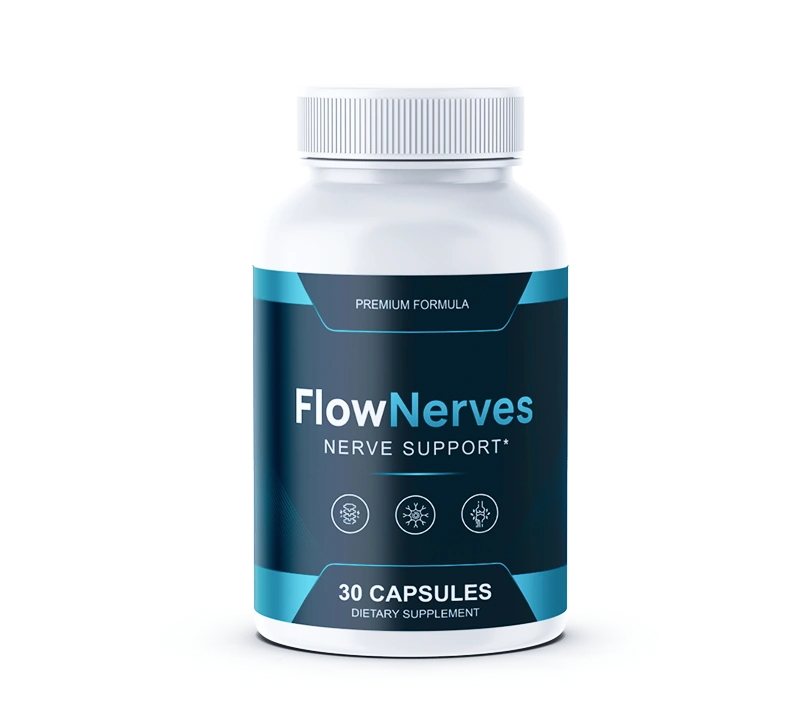
FlowNerves can be assessed directly on its serving schedule, ingredient list, capsule count, and package price. Those details are available to a buyer. A claim that it changes a medical symptom needs clinical evidence about the formula, the people taking it, and the outcome measured. A convenient format cannot answer that question by itself.
Before looking at an offer, write your goal in one sentence. “I want a straightforward daily supplement” is a buying preference. “I want treatment for persistent numbness” is a healthcare question. Being precise prevents a broad phrase such as nerve support from carrying a stronger meaning than the evidence allows.
What FlowNerves actually contains
The six named ingredients are magnesium glycinate, alpha-lipoic acid, butcher’s broom root extract, L-carnitine, turmeric extract standardized to 95% curcuminoids, and coenzyme Q10 as ubiquinone. Each bottle contains 30 capsules. The suggested use is one capsule daily with a meal and a full glass of water.
Several ingredients are grouped in a proprietary blend. Individual amounts are not established in the product details reviewed here. That is a practical limitation when comparing the formula with a study: the same ingredient name does not tell you whether the amount, preparation, or absorption is comparable.
The ingredient list gives you a starting point for questions, rather than a finished answer about results. Ask for a clear image of the Supplement Facts panel and the other-ingredient list. If you need an exact amount for a medication check or comparison, do not replace the missing number with an estimate from another brand.
Ingredient research and product research answer different questions
A study of an individual compound examines that compound under particular conditions. A finished-product trial examines the actual combination sold to buyers. The difference matters because a blend may use a different amount, combine ingredients differently, or be taken by people with different health needs.
For FlowNerves, no verified finished-formula trial is established in this review. That does not prove that no such research could exist anywhere. It means this page cannot offer you a product-specific success rate, an average reduction in discomfort, or a dependable response time. Those numbers would need a source that directly supports them.
Look at the title and methods of any paper offered as proof. Does the intervention name FlowNerves? Does the formulation match the bottle? Are the participants adults like the intended buyers? If the answer to the first two questions is no, the paper may explain an ingredient, but it cannot serve as a direct test of this product.
What the alpha-lipoic acid evidence shows
Alpha-lipoic acid attracts attention because it has been studied in diabetic peripheral neuropathy. A 2024 Cochrane review concluded that it probably has little or no effect on neuropathy symptoms after six months compared with placebo. The review also identified limitations in the included evidence.
This finding does not test FlowNerves. It does, however, put a clear limit on using the ingredient name as a shortcut to a promise of relief. A claim such as “contains alpha-lipoic acid, therefore proven to reverse nerve pain” would skip the actual research finding and add a conclusion the study does not support.
Keep the result in proportion. One research review about one ingredient should neither become a blanket endorsement of the blend nor a verdict that every possible use of the product is worthless. It is one relevant piece of evidence, with a specific population and a specific question.
How to read a study without getting lost
You do not need to understand every statistical term to ask useful questions. Start with what the researchers gave people, what they compared it with, how long the study lasted, and what changed. Then check whether the change was something patients could notice or only a laboratory measurement.
For example, an article about a chemical pathway is not the same as a trial showing that people walked more comfortably. A small study without a comparison group cannot separate a supplement’s effect from changes that would have happened anyway. A headline may sound decisive even when the paper is much narrower.
ClinicalTrials.gov explains study records and results, including the difference between research types. A registry entry can help you locate a study, but registration alone is not a positive result. Look for the completed findings and the exact intervention before treating a record as evidence for a purchase.
Dose, form, and duration need to match
Three details can change how relevant a paper is to your bottle: amount, chemical form, and duration. A paper using acetyl-L-carnitine does not automatically test L-carnitine. A trial involving a stand-alone compound does not automatically test a multi-ingredient capsule. A short experiment does not establish lasting benefit.
FlowNerves lists L-carnitine, and its CoQ10 is described as ubiquinone. The turmeric standardization describes the extract concentration, not the number of milligrams per serving. Reading these details carefully is more useful than counting how many scientific-sounding names appear in the formula.
When an exact dose is unavailable, say so. Do not assume that a proprietary blend matches a published trial simply because it contains one of the same ingredients. If matching a study amount is central to your reason for buying, ask the seller for the relevant label information before spending money.
Why one person’s result cannot predict yours
A customer may sincerely report feeling better after starting a supplement. The timing is worth recording, but it does not establish the cause. Sleep, activity, footwear, medicines, stress, and an underlying condition may also change over the same period. Personal experience and controlled evidence have different jobs.
This website does not provide a verified FlowNerves customer dataset from which to calculate typical results. There is no reliable basis here for claiming that most buyers improve or that a particular percentage notices a change. An invented average would make the offer easier to sell and harder for you to judge accurately.
If you read testimonials elsewhere, look for specifics without turning them into a forecast. How long did the person use the product? What else changed? Is the purchase verified by an identifiable platform? A detailed story can inform your questions, but it cannot guarantee the same experience for someone with a different history.
Nerve symptoms deserve their own assessment
Nerve discomfort is not a single condition with a single explanation. The National Institute of Neurological Disorders and Stroke describes different patterns of peripheral nerve problems and notes that treatment depends on the type, location, symptoms, and underlying cause.
If your real goal is help with continuing numbness, burning, weakness, or loss of balance, arrange a clinical assessment. A supplement label cannot identify which nerves are affected or explain why. Buying first and hoping the symptom tells you whether the product suits you can leave the actual question unanswered.
Bring the supplement label to the appointment if you are considering it. That lets the conversation include the product’s ingredients and your medicines without making the purchase a substitute for care. You can still ask about nutritional support while getting a proper explanation of the symptoms that prompted the search.
Can you set a useful personal check-in?
If a healthcare professional confirms the supplement is suitable for you, decide in advance what you want to observe. Keep the goal specific and modest. You might record whether you remembered the daily capsule, whether it upset your stomach, or whether the routine was practical alongside your existing medicines.
For symptoms, use the same simple description each time and record other changes too. For example, note when a medicine was adjusted or when you began a new activity. This is a personal record for discussion, not a clinical experiment. It cannot show that the capsule caused any improvement.
Do not increase the serving when you are disappointed. Do not stop a prescribed treatment to make the supplement easier to “test.” If you develop a concerning reaction, seek advice rather than waiting for a planned review date. Safety and treatment decisions should follow your circumstances, not an informal trial schedule.
The guarantee answers a purchasing question
FlowNerves has a stated 60-day satisfaction guarantee starting from the original purchase date. That gives you a policy to review if you are unhappy with the purchase. It does not establish that the product works, and it does not replace reading the seller’s current return procedure.
A six-bottle order provides 180 days of supply, but the listed guarantee lasts 60 days. Those periods are different. If you choose a longer package, do not assume you can finish every bottle and then decide whether to make a request. Keep the purchase date and policy together so the timing stays clear.
Before ordering, check how to contact the seller, whether bottles must be returned, and whether any shipping costs affect a refund. Save the terms shown at checkout. Clear purchasing records will be useful if an order has a problem, regardless of what you personally notice while taking the supplement.
Make the price fit the uncertainty
The two-bottle offer is $158 before shipping and any applicable tax, or $79 per bottle. Three bottles cost $207, or $69 each, with free US shipping listed. Six bottles cost $294, or $49 each, also with free US shipping listed. The three- and six-bottle offers list one and two bonuses respectively.
These figures let you compare cost; they do not reveal the likelihood of benefit. A lower bottle price does not reduce the uncertainty about the finished formula. The two-bottle package has the smallest listed upfront total, while the six-bottle offer requires more cash at the start.
Choose only a quantity you can comfortably afford if the product does not meet your expectations. If you need more label information or medical advice, wait for that answer. A discount is not a reason to rush past a question that matters to your health or budget.
A practical answer before you order
FlowNerves is easy to understand as a daily format: one capsule, a meal, water, and a 30-day bottle. Its six ingredients give you a clear list to review. The unresolved issues are individual blend doses and product-specific effectiveness. Those limits should remain visible when you weigh the offer.
Before buying, ask whether your goal is nutritional support or treatment of a symptom. Confirm the label fits your needs and check it against your medicines. Read the checkout total and return terms. If you want an evidence-based promise of nerve-pain relief from this specific formula, this review cannot provide one.
You do not need a dramatic verdict to make a good decision. You need to know what is established, what is missing, and what matters most to you. Use the ingredient information to ask better questions, use the prices to set a sensible budget, and keep medical concerns on their own proper track.
Questions worth sending to the seller
If a promised benefit is central to your decision, ask the seller for the paper that supports it. Request the study title or publication link, the exact product tested, and the amount used. “Our ingredients are researched” does not answer whether the finished capsule was tested for the outcome you want.
You can also ask for the full label before ordering. A clear picture should let you read the serving size and ingredients without guessing from a small front-bottle image. If the seller cannot provide an individual amount because it is part of a proprietary blend, keep that limitation in your comparison.
Save the response alongside the offer rather than trying to memorize it. A specific written answer makes it easier to discuss the product with a pharmacist and compare competing claims. You are buying a supplement, not taking an exam; you are allowed to ask for information in plain language.
What would make the evidence stronger?
A stronger basis for a product claim would include a clearly described trial of the same formula, with a suitable comparison group, defined outcomes, and transparent reporting of results and unwanted effects. The work should show what happened to participants rather than only explain why an effect might be possible.
Until evidence like that can be verified, avoid using a precise timeline or expected success percentage as a reason to order. Decide whether the known characteristics are enough for you. If they are not, waiting or choosing another approach is a reasonable buying decision.
SOURCES & FURTHER READING
Check the original information.
Ingredient studies and general consumer guidance do not establish the effectiveness of the finished FlowNerves formula. Product prices and terms must be confirmed with the seller.