FlowNerves customer reviews: start with the source
Customer reviews are most useful when you can tell who is speaking, what they bought, and which part of the experience they are describing. A name beside five stars is not enough to answer those questions. Before relying on a FlowNerves review, follow it back to the page where it was first published.
This page does not present a collection of verified FlowNerves customer submissions. There is no independent average rating or established satisfaction rate here. We explain how to assess customer accounts and how to use them alongside the label, package terms, and your own priorities.
Keep a simple distinction in mind. A review of the buying experience can help you assess ordering, delivery, packaging, and communication. A personal report about feeling different is more difficult to interpret. Both can be sincerely written, but they do not carry the same meaning for the next buyer.
For example, an account saying that three bottles arrived in good condition is a specific report about an order. An account saying that everyone will get the same health result makes a much broader claim. Good reading means noticing that difference before you let the story influence your decision.
Know whether you are reading a review or an advertisement
A customer review usually describes an experience in the writer’s own terms. A testimonial selected by a seller is part of the seller’s presentation. An affiliate article may evaluate the product while earning a commission from purchases. These formats can contain useful information, but the relationships should be clear.
This website contains affiliate links. We may earn a commission if you buy through them, at no extra cost to you. We are not the manufacturer or retailer. That disclosure helps you understand how this website is funded; it does not turn the content into a firsthand account of taking the capsules.
The FTC distinguishes consumer reviews from advertising testimonials. Its guidance also addresses incentives and insider relationships. For a buyer, the practical step is to look for any relationship that might affect how much weight you give an endorsement.
Do not assume that a disclosure makes every statement correct. Check the claim itself. Does the writer identify the product? Is the experience specific? Can a research claim be followed to a relevant source? Clear funding information and sound evidence are separate checks, and both matter.
Look for the order details that make a review useful
A helpful review often gives enough context to connect the account to a real purchase. Useful details can include the package quantity, order month, delivery experience, condition of the bottles, and the issue the reviewer wanted to resolve. The writer does not need to publish private information to provide that context.
Keep order numbers, home addresses, payment information, and medical records out of public comments. A reviewer can explain that a parcel arrived late without displaying the shipping label. Specific writing does not require sharing information that creates an avoidable privacy risk.
Check whether the product shown matches FlowNerves. Similar names, different bottle designs, and references to an unrelated formula can make a comment less relevant. If a review is about a different item or seller, it should not become part of your impression of this offer.
Dates also provide context. A review describing an older package price may accurately reflect an earlier order while no longer matching today’s checkout. Use it to understand that person’s experience, then confirm the current package total separately. The newest account is not automatically the most reliable, but the timing should make sense.
Understand what verified purchase can tell you
A verified-purchase label is useful only when you know what the platform verifies. It may indicate that an order was connected to the account posting the comment. It does not necessarily confirm that every sentence in the review is accurate, that the writer followed the directions, or that the product caused a reported result.
Read the platform’s explanation if its verification label is central to your decision. A seller’s own badge and a marketplace’s verification process may work differently. Treat the label as one piece of context rather than as a certificate for every claim in the text.
You can also look at the reviewer’s level of detail without turning it into a rigid test. A short account may be genuine. A long account may still be promotional. The useful question is whether the statements give you something relevant to check, rather than whether the review looks impressive.
Avoid copying a group of ratings from one place to another without their original context. An average is tied to a particular set of reviews, product listing, and date. A score placed beside FlowNerves without those details can create an impression of certainty that the underlying information does not support.
Read positive and negative accounts with the same care
A positive review can be sincere and still leave out something you need to know. Someone who loves the one-capsule routine may not discuss the price, guarantee, or ingredient amounts. Their priorities may differ from yours. Use the account to identify a possible advantage, then check whether it matters to your purchase.
A negative review can also be sincere without proving that every customer will face the same issue. A damaged parcel is a problem to resolve, but it is not a clinical test. A person who noticed no change has described their own experience, not a measured response rate for all buyers.
Separate observations from conclusions. “The support reply arrived after three days” is an observation if accurately reported. “The whole company never answers anyone” is a much wider conclusion. Look for what the writer can actually know from the events they describe.
Do not manufacture balance by counting an equal number of glowing and unhappy quotations. The goal is to understand the available information, not to stage a debate. When there is no verified customer dataset, it is more honest to say that than to fill the space with selected stories or a made-up percentage.
Keep health stories separate from evidence about the formula
FlowNerves names six ingredients, but a customer’s experience does not establish how each one behaved inside the finished product. It also does not reveal the individual amounts in a proprietary blend. Those questions need label information and appropriate research, not a testimonial.
Be especially careful when a review turns a personal improvement into a fixed promise. A claim that everyone will notice relief by a certain day is different from one person saying what they felt. No reliable response timetable for the finished FlowNerves formula is established on this website.
You can ask what else happened during the period described. Did the writer change medicines, activity, sleep, or another part of their routine? The point is not to challenge the person’s honesty. It is to recognize that a personal story rarely isolates the product as the only explanation.
When reading online health material, the National Library of Medicine’s evaluation tutorial offers a structured way to examine the information behind a page. For your own purchase, ask whether a claim has a source that actually answers the question being asked.
The package details to confirm for yourself
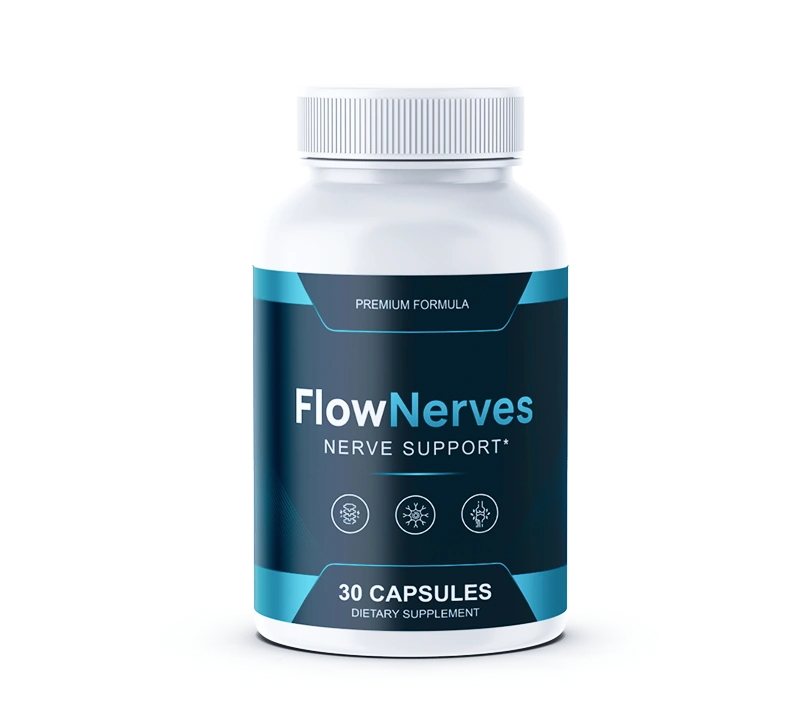
You do not need a customer quotation to check the basic package arithmetic. A bottle contains 30 capsules. At one capsule daily, the listed two-bottle package provides 60 days, three bottles provide 90 days, and six bottles provide 180 days. Supply length is a count, not a predicted result.
The listed totals are $158 for two bottles, $207 for three, and $294 for six. These work out to $79, $69, and $49 per bottle respectively. The three- and six-bottle offers list free US shipping; the two-bottle order has shipping added at checkout. Applicable taxes and current terms belong in your final comparison.
A review mentioning a lower bottle price may be referring to the six-bottle package. That does not mean a two-bottle order receives the same unit price. Look at the quantity behind the price before assuming the seller changed the offer or charged the reviewer incorrectly.
Likewise, a customer who ordered six bottles may discuss bonuses that do not accompany the smaller package. The three-bottle offer lists one bonus and the six-bottle offer lists two. Confirm the extras at checkout rather than treating another buyer’s package as the default for every order.
How to read comments about refunds and support
Refund reviews need a timeline. Look for when the order was placed, when the buyer requested help, what response they received, and whether the situation was resolved. A comment written before the seller replied tells a different story from an account documenting the full exchange.
The stated FlowNerves guarantee lasts 60 days from purchase. That is separate from the number of days of capsules in the box. A reviewer who expected the guarantee to last until all six bottles were used may have misunderstood the timing, even if their disappointment is real.
Do not assume every return policy detail from a brief comment. The buyer may omit whether they contacted the correct support channel, followed the return instructions, or included an order number. Those missing details do not prove fault on either side. They limit what you can conclude from the account.
Before you order, find the seller’s support details and save the policy yourself. Your own record is more useful if you need help later than a screenshot of somebody else’s complaint. Clear documentation also lets you explain a problem without relying on broad accusations or trying to reproduce another person’s situation.
If you want to leave your own FlowNerves review
Describe only what you personally experienced. State the package you bought and the part of the order you want to discuss. If you are reviewing convenience, explain what made the routine easy or difficult. If you are reviewing delivery, include the relevant sequence without exposing your home address or tracking account.
Use plain language about health changes. You can explain what you noticed and when, but do not claim that your experience proves a cure or that every buyer will respond the same way. Avoid advice telling other readers to stop prescribed treatment or copy your personal supplement routine.
Disclose a free product, discount, payment, or other connection if it influenced the review context. Readers should understand whether you bought the product at the usual price or received something in exchange for posting. A clear account is more useful than a sales pitch disguised as personal experience.
If support later resolves the issue you described, consider adding an update that explains what happened. Keep the original timeline clear so readers can follow it. A review can show both the problem and the resolution without pretending one of them never occurred.
A short record for comparing buyer accounts
When several reviews seem relevant, make a short note of what each one actually adds. One may describe the two-bottle order, another may explain a support exchange, and a third may discuss the daily capsule schedule. Keeping those observations separate prevents several different stories from becoming one unsupported conclusion.
Record the source and date beside each note. You do not need to copy the whole review or build a spreadsheet. A few lines can be enough to show which question the account helped answer and which question it left open.
For example, a delivery account might help you identify what to ask the seller about shipping. It cannot tell you whether the formula suits your prescription medicines. A convenience account may describe the serving schedule clearly, but it cannot establish individual ingredient amounts that do not appear on the label.
Stop collecting comments once you know what you still need to verify. More accounts are useful only if they add relevant information. Your final decision should come back to the current label, the complete price, the seller’s terms, and any personal advice you need before use.
Use reviews to ask better questions before buying
Turn each useful review into a question you can answer. If a buyer mentions an unclear charge, check the order summary. If someone found the label hard to read, ask for a clear photograph. If delivery was the concern, confirm the seller’s current shipping information before placing your order.
Do not let hours of scrolling replace the checks that matter to you. Decide which details would change your choice, then look for those details directly. The bottle quantity, full label, total cost, return procedure, and contact route usually help more than another unsourced star graphic.
If the purchase depends on whether the formula suits your medicines or health history, take the label to a pharmacist or healthcare professional. A stranger’s comment cannot answer that personal question. A buyer-friendly decision process leaves room for an individual answer rather than treating popularity as suitability.
FlowNerves customer reviews can add context when their origins and limits are clear. They should sit beside the product facts, not replace them. Once you have checked the details that matter to your budget and routine, view the current offer and choose only the quantity you are comfortable ordering.
SOURCES & FURTHER READING
Check the original information.
- FTC: Consumer reviews and testimonials questions and answers ↗
- National Library of Medicine: Evaluating internet health information ↗
Ingredient studies and general consumer guidance do not establish the effectiveness of the finished FlowNerves formula. Product prices and terms must be confirmed with the seller.